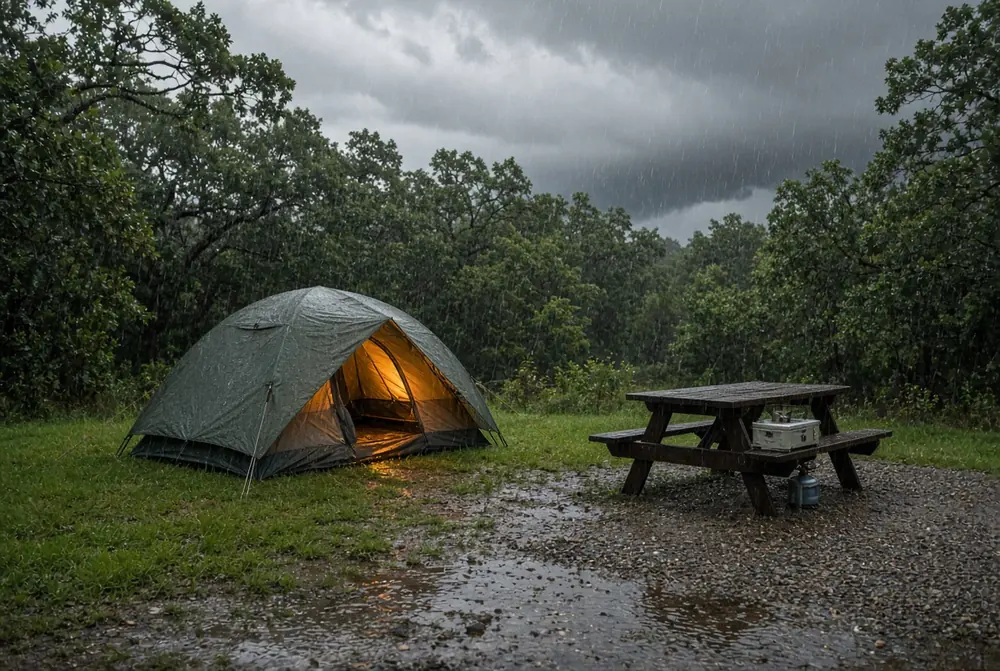
To camp through Midwest rain, pick a site with a slight crown, stake every corner and guy out the fly before the storm, pack sleep gear and electronics in dry bags before you leave home, cook under a dining fly instead of in the tent, and keep a lantern plus a headlamp within reach.
A dry forecast in Missouri is a rumor, not a promise. A 20 percent chance of rain is often a two-hour cell that arrives at dinner, soaks every chair, and leaves the inside of the tent smelling like a wet dog. The trip does not have to end. Rain camping fails when people treat the storm as a surprise instead of a layout problem.
This guide is for car campers and family campers at Midwest state parks and Corps lakes — not for people hiking a ridge in a two-pound tarp. The job is simple: keep sleeping gear dry, keep a place to cook, and keep a way to see after dark.
Why Midwest rain is different from “a little drizzle”
Summer and early-fall storms here are short, hard, and windy. They dump water faster than a cheap rainfly can shed it. They also raise humidity inside the tent so condensation looks like a leak even when the fly is doing its job.
Three things make a wet night worse than the radar suggested:
- Low sites collect runoff. A pad that looked flat at 4 p.m. becomes a puddle when the loop drains toward the lake.
- Saturated soil will not hold short stakes. Wind then lifts the fly and drives rain under the edge.
- Cotton clothing and an open bag of gear turn one wet hour into a wet weekend.
Pick the site like water is already falling
Walk the pad before you unload. Look for a slight crown, not a dish. Stay off the downhill edge of the loop and away from the obvious trench people dug last weekend. Leave a gap between the tent and the picnic table so splash from the tabletop does not hit the door.
Point the door away from the wind if you can read the trees. A vestibule that faces the storm becomes a bucket. If the only open site sits in a low spot, use the car as a wind wall and keep the sleeping bags in the vehicle until the fly is staked and the floor is dry.
Set the shelter so water has somewhere to go
A waterproof dome or family tent only works if the fly is tight and the floor is off the mud. Stake every corner. Guy out the fly even if the sky is still blue. Extra line is cheaper than a wet sleeping bag.
Shop family and backpacking tents with a real rainfly and enough vestibule space to peel off wet layers before they reach the sleeping pads. A 3-season family tent is enough for most Midwest weekends if you treat setup as part of weather, not an afterthought.
Keep a small towel and a change of socks in a zip bag by the door. The first thing that comes inside after a storm should not be a dripping jacket landing on the bags.
Dry bags are the difference between damp and ruined
The tent keeps rain off the top. It does not keep splash, wet grass, and a soaked vestibule off your extra clothes. Put sleep gear, electronics, and a full change in waterproof dry bags before you leave the driveway, not after the first drop hits.
Use waterproof dry bags for camping and boating in two sizes: a small one for phones, headlamps, and fire starters, and a larger one for clothes and sleeping bags. Roll the closure the way the maker shows. A half-rolled bag is just a wet sack with optimism printed on it.
Park chairs, shoes, and cookware under the table or in the vestibule. They can get wet. The bags cannot.
Cook under cover. Do not cook in the tent.
Wet wood and a fire ban are common on the same weekend. A stove still works in the rain if you give it a roof and a level surface. Slide the picnic table under a dining fly or set the stove on the downwind end of the table and keep the fuel bottle upright.
A high-power 3-burner propane camp stove boils water fast when everyone is cold and impatient. Pair it with camp cookware that has lids. Lids cut cook time and keep rain out of the pot.
Never run a stove or a grill inside a closed tent. Rain is uncomfortable. Carbon monoxide is not a weather problem you can towel off.
Light that still works when the fly is dripping
Storms kill the evening. People trip on guy lines, dump the pasta, and cannot find the zipper. Hang a light in the vestibule and keep a second light on your head so both hands stay free.
The waterproof camping lantern speaker handles light rain and hangs from a loop or magnet. Keep a headlamp from the lanterns, headlamps, and LED lights collection in the small dry bag, not in the bottom of a tote.
Clothes, fire, and the morning after
Pack one synthetic layer you can wear wet. Cotton holds water against skin and makes the next morning colder than the storm. If you need a fire after the rain, start with dry tinder you packed in a bottle, not with wood from the ring.
Keep lighters and fire starters in the same small dry bag as the headlamp. A soaked paper packet of matches is a souvenir, not a plan.
When the storm passes, open both doors and wipe the floor. Hang wet fly edges so they do not drip onto bags overnight. If the sleeping kit got wet anyway, finish the night in the car and dry gear at home. Pride is a poor insulator.
A short rain kit that actually gets used
- Stakes and extra guy line already on the tent, not in a bin under the chairs
- Two dry bags packed before you leave
- One towel dedicated to the tent door
- Stove, lidded pot, and a full propane bottle
- Waterproof lantern plus a headlamp with fresh batteries
- A small first aid and safety kit within reach — wet ground is where ankles roll
Rain does not ruin a Midwest camping weekend. Unprepared gear does. Set the tent like the storm is coming, keep sleep gear in dry bags, and cook under a roof. The radar can be wrong. The layout does not have to be.
Quick questions
How do I keep a tent dry in a Midwest storm?
Walk the pad first and pick a slight crown, not a dish. A waterproof dome or family tent only works if the fly is tight and the floor is off the mud, so stake every corner and guy out the fly even if the sky is still blue.
Can I cook inside the tent when it rains?
No. Never run a stove or a grill inside a closed tent. Slide the picnic table under a dining fly or set the stove on the downwind end of the table, and use lidded cookware to cut cook time and keep rain out of the pot.
What size dry bags should I bring for rain camping?
Two sizes: a small one for phones, headlamps, and fire starters, and a larger one for clothes and sleeping bags. Pack them before you leave the driveway.
What if the sleeping bags get wet anyway?
Finish the night in the car and dry the gear at home.