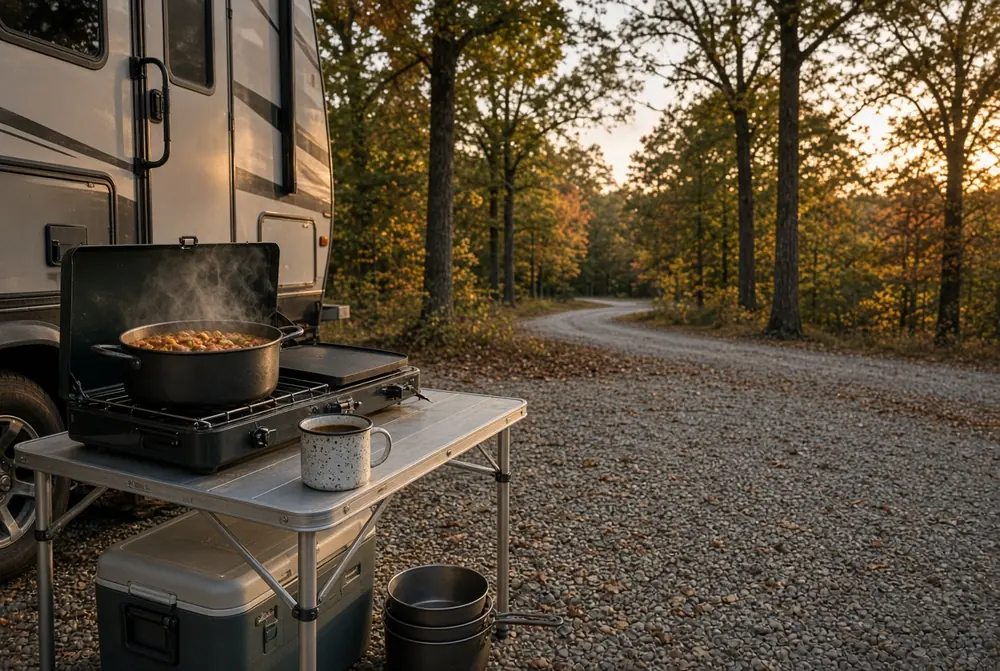
For a shoulder-season camp kitchen, bring a two- or three-burner propane stove with a stable base and a real windscreen, fueled by 16.4 oz cylinders or a 20 lb tank. You lose about two minutes of daylight a day through September, so start water when you start the rainfly and cook one-pot meals the first night.
Labor Day is not the end of camping in Missouri. It is the start of the season that actually tests a kitchen.
Days are still warm on a lake loop. Nights drop. Wind comes across the water. You finish tent or fifth-wheel setup later than you meant to, and dinner has to happen before dark. That is the filter we use when we pack a stove: will it light in a gust, will the pot stay on the grate, and will the whole kit fit next to the coolers?
This is not a tournament cook setup. It is the kitchen we use on Midwest weekends.
What changes after Labor Day
- Daylight. You lose about two minutes a day through September. If you cook at 7 p.m. in July, you are cooking in the dark by late September.
- Wind. Open Corps lakes and prairie parks do not shelter a cheap burner. You need a stove with a real windscreen or a place to set up behind the rig.
- Fuel. Propane is still the easy answer at drive-up sites. Wood stoves look good on a still evening and fight you when the front comes through.
- Cleanup. Cold water and short light make a huge pot set a chore. Pack fewer pieces that nest.
If you are matching gear to a trip instead of buying “one stove for everything,” start in Camp Kitchen.
Propane, dual-fuel, or wood?
Two- or three-burner propane is the default for car camping and a fifth-wheel site. You can find 16.4 oz cylinders or a 20 lb tank on the way to almost any Missouri park. Look for a stable base and burners that sit in a well, not on a flat grate that dumps a pot in a gust.
A compact backpacking burner belongs on a trail night, not a family weekend. It will boil water. It will not cook for four people while someone else is slicing onions.
A wood camp stove earns a place when you have dry wood, time, and a fire-allowed site. It does not replace propane for the first night after a late arrival.
We keep a portable 3-burner propane stove in the truck and treat wood as optional. From our shelves: Coleman Even-Temp Propane Stove.
The actual weekend kit
Pack this, not a drawer from home:
- Stove + fuel you already tested at home.
- One pot that holds chili or pasta for the group, one skillet, one kettle.
- A folding table so food is not on the ground. See camp tables.
- A lantern you can set next to the stove. Headlamps are for walking, not for cooking. Shop lanterns and power.
- A knife that stays sharp after onions and sausage. See knives and tools.
- Plates and utensils that nest. Skip the 24-piece set if you are in a two-person tent.
If you sleep in a fifth-wheel, the indoor cooktop still matters — but a lot of parks want you cooking outside when weather allows. Have both plans. From our shelves: Coleman 24-Piece Enamelware Cook Set.
Cook before the light dies
The useful habit is not a recipe. It is timing.
- Start water when you start the rainfly or the shore power cord.
- Use one-pot meals the first night.
- Save the grill for Saturday when you have daylight to spare.
- Keep a backup lighter in the kitchen tote, not in the glove box.
Rain between setup and dinner is normal here. That is why we talk about kitchens the same way we talk about tents and sleep systems: packed size, setup time, and weather.
A simple two-night menu that works in wind
Friday: smoked sausage, peppers, and boxed rice in one skillet.
Saturday breakfast: coffee plus eggs if the table is up; oatmeal if it is not.
Saturday dinner: foil packets on a grate if the park allows fire; same skillet if it does not.
Sunday: leftover rice and whatever is left in the cooler before you drive.
None of that needs a $1,100 marine grill. Those exist in the catalog for people who cook on a boat. Most Midwest weekends do not.
Quick questions
Is a backpacking stove enough for a family fall weekend?
No. A compact backpacking burner belongs on a trail night. It will boil water, but it will not cook for four people while someone else is slicing onions.
What fuel should I bring for a fall camp kitchen?
Propane. You can find 16.4 oz cylinders or a 20 lb tank on the way to almost any Missouri park.
How do I cook in the wind at an open lake or prairie park?
Open Corps lakes and prairie parks do not shelter a cheap burner. Use a stove with a real windscreen and burners that sit in a well, or set up behind the rig.
Why does dinner feel rushed on fall trips?
You lose about two minutes of daylight a day through September. If you cook at 7 p.m. in July, you are cooking in the dark by late September.