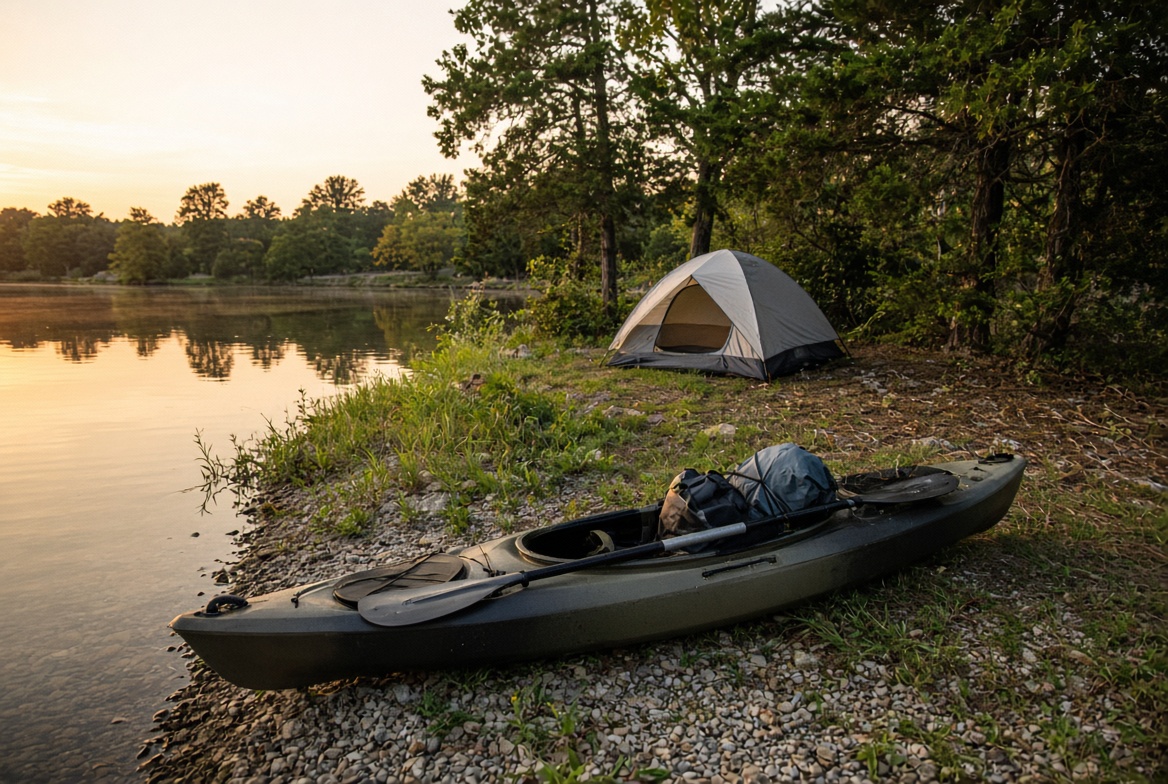
A kayak changes the map. The campsite is no longer the place you can drive a cooler to. It is the cove you can reach in an hour, the gravel bar around the bend, or the quiet arm of a Corps lake that truck-campers never see. That is the point. It is also why kayak camping punishes sloppy packing faster than car camping does.
This guide is for weekend trips on Midwest lakes and slower rivers — Lake of the Ozarks arms, Truman, Mark Twain Lake, the Current and Meramec where paddling and camping are allowed, and similar water in Illinois, Iowa, and Arkansas. It is not a whitewater manual. If the water needs a helmet, you need a different article.
Choose water that matches the boat and the weekend
Pick a lake or a mild river with a known take-out. Wind on a Midwest reservoir builds in the afternoon. A two-mile crossing that looked friendly at 8 a.m. is a slog at 3 p.m. when whitecaps start. Rivers add current, strainers, and the need for a shuttle.
Check three things before you load the roof:
- Put-in and take-out that you can legally use, with a place to leave a car
- Weather and wind forecast for the water, not just the nearest town
- Camping rules. Some shorelines allow dispersed camping. Many parks do not. A reserved paddle-in site beats an argument with a ranger at dusk.
Pack for the wettest version of the trip
Everything that matters goes in a dry bag, then that bag gets strapped in. A hatch is not a dry bag. A backpack tossed in the cockpit is a sponge.
Use waterproof dry bags in two or three sizes. Sleeping bag and spare clothes in the largest. Food and a stove kit in a mid size. Phone, headlamp, fire starter, and a small first aid kit in a bag that stays clipped in front of you.
A backpack helps on the portage from the parking lot to the water. Once you launch, the pack should be inside a dry bag or at least lined. Cotton sleeping bags and loose snacks do not survive a capsize drill you did not plan to take.
Keep the boat simple so the camp still works
You need a shelter that packs small, a way to cook without a picnic table, and a light you can turn on with wet hands.
A compact tent from the family and backpacking tents collection is enough if you are staying on a bank, not hiking a ridge. Look at packed size first. A palace tent that barely fit in the trunk will not fit in a kayak.
Cook on a small stove, not a three-burner feast, unless you have a second boat. Lidded camp cookware and one reliable fire starter cover dinner if wood is wet. Hang a waterproof lantern from a tree or set it on a rock so you are not cooking by phone light.
Fishing from the kayak without turning camp into a tackle shop
The reason many people kayak-camp in the Midwest is bass, crappie, and the chance to reach banks you cannot walk. Pack one rod that breaks down and a small box, not five rods and a crate.
A two-piece IM7 spinning or baitcasting combo rides in rod leashes or along the hull. Keep spare line and a few lures in the mid-size dry bag, not loose in the cockpit where they snag everything when you wet-exit.
If you keep fish, use a fish bag or cooler that closes. A stringer dragging beside a kayak is how you feed turtles and lose dinner. Clean fish away from the tent the same way you would at a drive-up site.
Want a quieter motor option for flat water instead of a paddle the whole way? Read the Go Boat guide and treat that boat with the same dry-bag rules. Electricity does not make electronics waterproof.
Set camp like the water can still reach you
On a lake, look at the wind line and the wake from Saturday boat traffic. On a river, look at the high-water mark on the bank and do not sleep on the pretty gravel that sits six inches above today’s flow. Storms upstream change rivers faster than forecasts on your phone.
Land, get the boat above the wet line, and tie it. Unload dry bags onto a stuff sack or a small tarp so they are not sitting in mud. Then pitch the tent. People who unpack the sleeping bag first end up holding a wet bag while they look for stakes.
A folding chair is optional. If weight allows, a compact chair from camping chairs and tables makes a bank camp feel like a camp instead of a rock. Leave it lashed on deck only if it cannot act as a sail.
Stay found after the last cove
Lake arms look the same at dusk. Tell someone the put-in, the planned cove, and the time you will check in. Carry a light you can signal with and a way to mark the boat.
A mini GPS tracker on the hull or in a deck bag helps if the boat floats off while you cook. A headlamp belongs on your person, not in the bag under the hull. Phones die. Headlamps should not.
Pack a compact first aid and safety kit for hook punctures, scraped shins on limestone, and the blister you will get from a day of paddling. Waterproof it.
A weekend packing list that fits in a kayak
- PFD worn, not stored under the seat
- Two or three rolled dry bags, already packed at home
- Compact tent, sleeping bag, pad
- Small stove, lidded pot, lighter in a dry vial
- One breakdown rod, small lure box, fish bag if you keep fish
- Lantern plus headlamp plus charged power bank
- Water plan — jugs from the put-in, or treatment if you are refilling
- Trash bag that goes home with you
For drinking water away from a hydrant, use the same rules as How to make camp water safe: clear water is not safe water. Treat it.
What ruins a kayak-camping weekend
- Launching into rising afternoon wind on a big reservoir
- A sleeping bag that is not in a dry bag
- No reserved or legal place to sleep
- Fishing tackle loose in the cockpit
- No light on your person after sunset
Kayak camping is not a different sport from camping. It is camping with a weight limit and a wet floor. Pack like the boat will tip, camp like the water can rise, and keep the food and sleep kit in bags that actually close. The quiet cove is the reward. Dry gear is how you enjoy it.
Related: Camping + fishing lakeside getaway · Go Boat portable electric boat · How to make camp water safe
