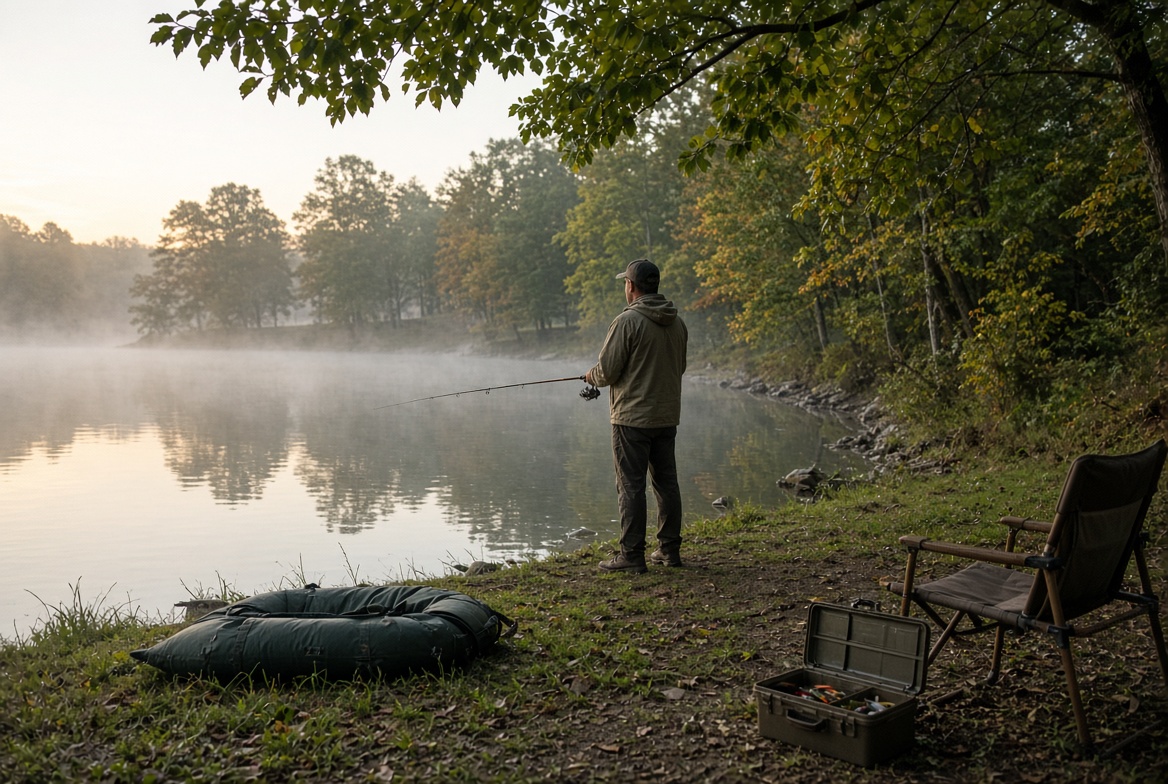
Most people treat the campsite as housing and the lake as a separate errand. They set the tent, then drive to a ramp they do not have a boat for, and fish the same 40 feet of bank as everyone else who arrived at 4 p.m.
You can do better than that without owning a trailer.
Missouri state parks and Corps lakes are built for this: a loop, a cove, a dam face, a courtesy dock. The trip works when the fishing kit is part of the same load as the tent and the cooler.
Pick water you can reach on foot or by air
Ask three questions before you reserve a site:
- Can I walk to water from the loop in under 15 minutes?
- Is there a quiet cove or spillway, or only a swim beach?
- Are boats allowed if I show up with something that packs in a bag?
If the answer to all three is no, book a different park. A pretty campsite with no fishable water is a camping trip. That is fine. Do not pretend it is a fishing weekend.
For river current, seams, and smallmouth, use our Fishing Missouri Rivers guide. This post is for park lakes and ponds.
Three ways to fish without a bunk
The bank kit. A 7-foot combo, a small tackle box, and a chair. That is enough for dam faces, fishing jetties, and kids on a Saturday. Shop rods, reels, and combos. A medium combo covers bass and panfish on most Midwest park lakes. Leave the ice rod at home unless the forecast actually calls for ice.
The float tube. You get off the bank without a trailer or a ramp. Inflate at the water, fish the weed line the bank crowd cannot reach, deflate for the ride home. That is the point of the tubes in Go Boats. Wear a PFD. Stay off big main-lake wind.
The packable boat. A 12-foot inflatable like the Solstice Outdoorsman 1200 is a different trip: more people, more gear, a pump, and a real launch. Use it when the park has a ramp or a gradual shore. Do not treat it like a kayak you toss on a roof rack in five minutes.
We keep Go Boats in the shop because lake weekends are how a lot of Midwest trips actually happen — not because every site needs a $1,999 hull on the homepage.
What to pack next to the tent
- One combo you have already used, not three “just in case” rods.
- A handful of lures in two colors and two sizes, plus spare line.
- Headlamp and a lantern for the walk back in September dark.
- PFD if anything inflatable leaves the bag.
- License, and a check of the park page the morning you drive. Closures and “no fishing from the beach” rules change.
If you are in a fifth-wheel, the same list sits in a tote in the truck, not buried under leveling blocks. Power and leveling still come first on the site; fishing is what you do after the rig is down. That is RV gear, then fishing — not the other way around.
A Saturday that works
- Fish first light from the bank or the tube.
- Eat a real breakfast. See the shoulder-season kitchen [blocked] once that post is live, or cook from Camp Kitchen.
- Midday: nap, hike, or sit. Fish are not obligated to feed at 1 p.m. on a bright lake.
- Last light: back on the point or the cove. Pack the tube while you can still see the valves.
Kids do better with a short pink combo and a dock than with a 7-foot baitcaster and a speech about drag. Put the simple kit in their hands and keep the good rod for the evening.
Safety that is not a lecture
Calm lakes only for inflatables. Local rules first. No motor where the park says no motor. Come off the water when the wind stands the whitecaps up. A tube that is fun in a cove is a problem on the main lake at Truman or Stockton on a front.
